
 Image 1 of 10
 Image 2 of 10
 Image 3 of 10
 Image 4 of 10
 Image 5 of 10
 Image 6 of 10
 Image 7 of 10
 Image 8 of 10
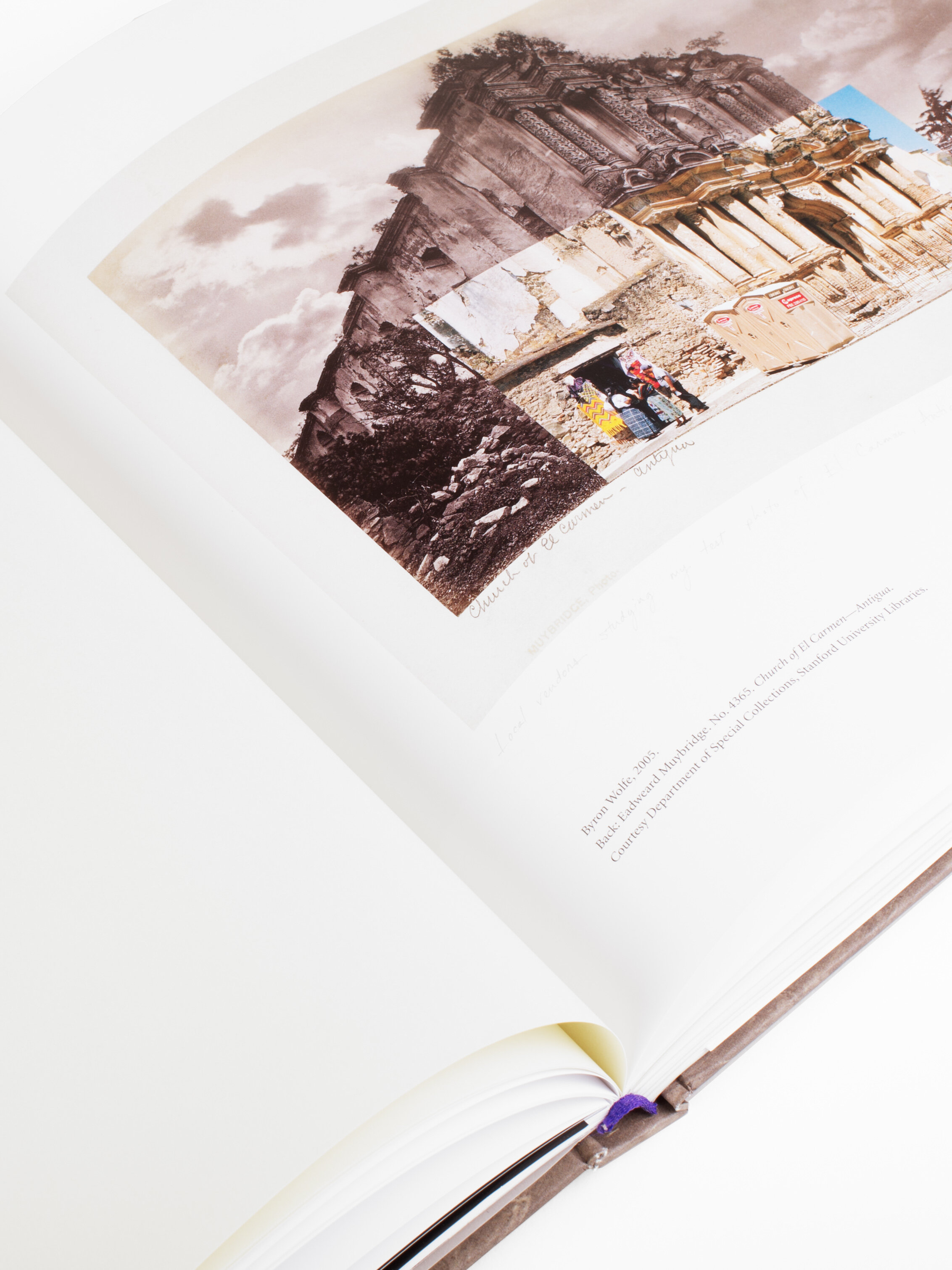 Image 9 of 10
 Image 10 of 10
In 1875, after being acquitted for the murder of his wife’s lover, Eadweard Muybridge spent a year photographing along the Central American Pacific Coast, particularly in Guatemala and Panamá. Upon his return to California in 1876, he published a very limited number of albums of the photographs (eleven are known), each of which was unique in size and scope.
From 2007 – 2010, photographer BYRON WOLFE (born 1967) tracked down and cataloged every known Muybridge Central American photograph. Working with cultural geographer Scott Brady, they traveled to many of Muybridge’s sites to rephotograph and study them. Through photographic collage, interpretive rephotography, illustrations and essays, this book examines an exceptionally rare series by Muybridge.
…the madness of the past and the terror of the future, amid the epiphanies of beautiful light and majestic space and the contradiction of the present.
— Rebecca Solnit
In 1963 the waters began rising behind Glen Canyon Dam and 170 miles of the Colorado River slowly disappeared as the riverbed and surrounding canyons filled with water. Those who supported and those who opposed the dam considered it a long-term transformation; environmentalists mourned Glen Canyon as dead and gone forever. But it’s coming back, in a victory that is also the pervasive disaster of climate change.
Byron Wolfe, Mark Klett, and Rebecca Solnit spent half a decade exploring Glen Canyon as expectations and possibilities changed and the river reemerged at the upper end of the reservoir. Their starting point was Eliot Porter’s landmark book of color photography, The Place No One Knew: Glen Canyon the Colorado, published by the Sierra Club in 1963 as a political statement about what had been lost under the dam’s waters and why it should never happen again. Their ending point is the reemergence of the river and the rise of questions about climate, the fate of the southwest, the folly of human endeavors to control nature, and the possibility of seeing these places and problems in new ways.
Drowned River is a book about climate change, but also about how photography can describe beauty and trouble simultaneously, about depth and shallowness, about what it takes to understand a place and to come to terms with the enormous scale of the changes we have set in motion.