
 Image 1 of 8
 Image 2 of 8
 Image 3 of 8
 Image 4 of 8
 Image 5 of 8
 Image 6 of 8
 Image 7 of 8
 Image 8 of 8
YOU MAY ALSO LIKE
-
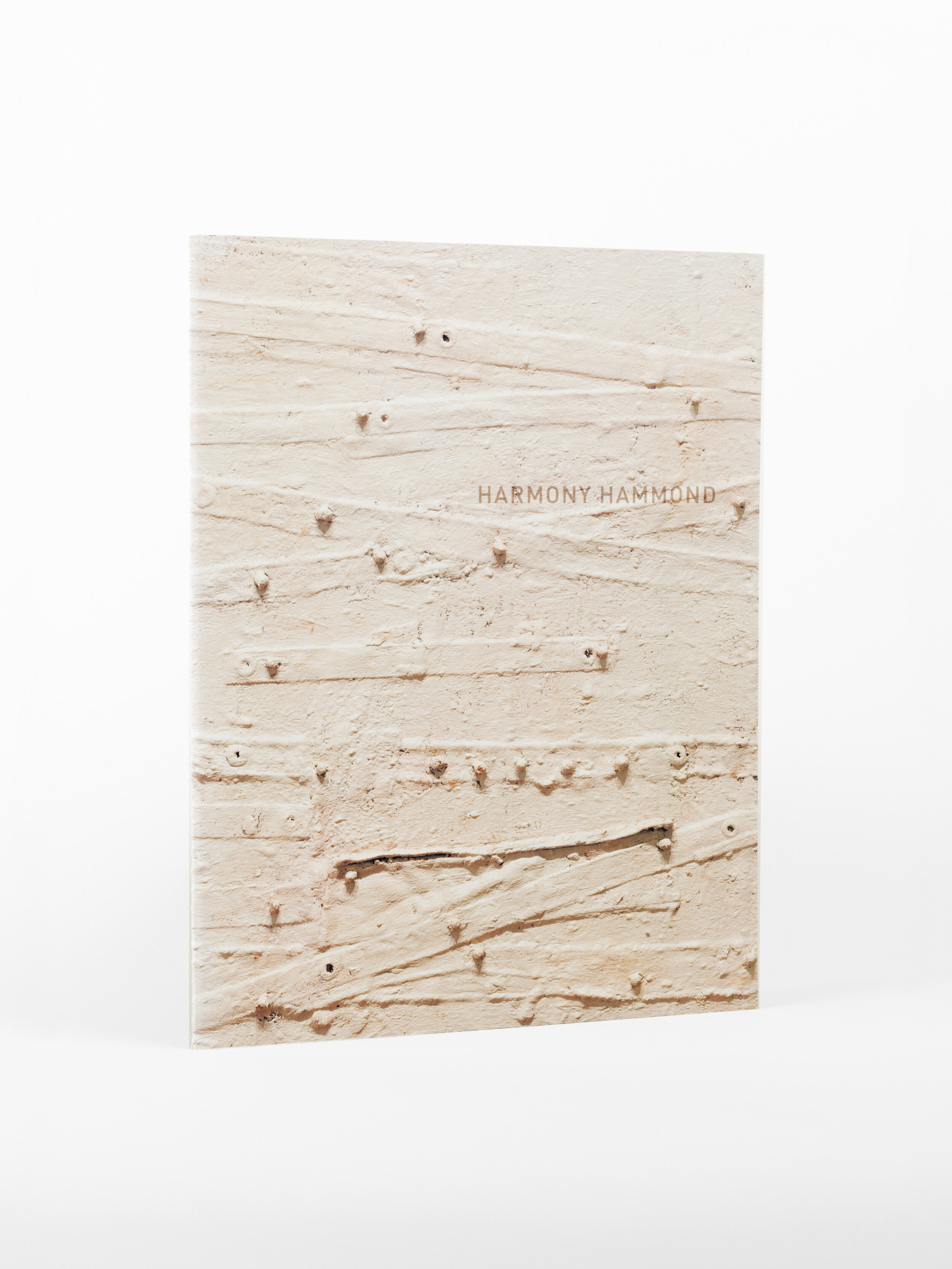
Artwork and text by Harmony Hammond
Text by Alex Bacon9.5 x 12.5 inches
84 pages / 32 images
ISBN: 9798890180704
Trade — $40
Now RARE — $80 trade / $85 signed -
Harmony Hammond (b. 1944) is an artist, writer, and curator. A leading figure in the development of the feminist art movement in New York in the early 1970s, she received her BA from University of Minnesota in 1967 before moving to New York in 1969. She was a co-founder of A.I.R., the first women’s cooperative art gallery in New York (1972) and Heresies: A Feminist Publication on Art & Politics (1976). Since 1984, Hammond has lived and worked in northern New Mexico, teaching at the University of Arizona, Tucson from 1989 to 2006.
Hammond has exhibited in solo and group exhibitions worldwide, at venues including The Aldrich Contemporary Art Museum (Ridgefield, CT), Whitney Museum of American Art (NYC), Museum of Contemporary Art (Los Angeles), National Museum of Women in the Arts (Washington, DC), Centre Pompidou (Paris), Guggenheim Museum (Bilbao), MoMA PS1 (NYC), and the Vancouver Art Gallery. Her work is in the permanent collections of the Art Institute of Chicago, Brooklyn Museum (NYC), The Metropolitan Museum of Art (NYC), The Museum of Modern Art (NYC), National Museum of Women in the Arts (Washington, DC), New Mexico Museum of Art (Santa Fe, NM), Phoenix Art Museum (AZ), Walker Art Center (Minneapolis, MN), and Whitney Museum of American Art (NYC), among others. She is the recipient of many awards and fellowships, including the Anonymous Was A Woman Award (2014); the Lifetime Achievement Award, Women’s Caucus for Art (2014); the Distinguished Feminist Award, College Art Association (2013); Pollock-Krasner Foundation Fellowship (2007 and 1989); and Joan Mitchell Foundation Award (1998).
The artist’s book, Wrappings: Essays on Feminism, Art and the Martial Arts (1984), is a foundational publication on 1970s feminist art. Her groundbreaking book Lesbian Art in America: A Contemporary History (2000) received a Lambda Literary Award and remains the primary text on the subject. Her archive is housed at the Getty Research Institute (Los Angeles).
I always say [the art is] active even when there’s no sound in the room; they are affecting the subtlest of sounds in the space—dampening and absorbing even the human voice.
— Jennie C. Jones
A Free and Shifting Tonal Center is Jennie C. Jones’s first monograph, exploring her interdisciplinary practice that moves viewers through both visual and auditory engagement. Aurally altering the spaces in which her paintings, sculptures, and installations are on view, Jones’s work encourages viewers to anticipate sound even in the quietest of environments.
Conceptually, Jones’s practice reflects on the legacies of modernism and minimalism while underscoring the connection between minimalism and music, illuminating the influence of the Black avant-garde. Bringing this multi-sensory experience to book form, A Free and Shifting Tonal Center unites documentation of recent exhibitions—including Dynamics, her expansive show at the Guggenheim Museum (2022)—with excerpts of text, poetry, and conversations to create a “score” that reveals the layers of Jones’s artwork. Part artist’s book and part primer, this lyrical volume unfolds in movements, like a printed and bound evening of poetry, prose, and music.