Image 1 of 8
Image 2 of 8
Image 3 of 8
Image 4 of 8
Image 5 of 8
Image 6 of 8
Image 7 of 8
Image 8 of 8
American Geography: Photographs of Land Use from 1840 to the Present
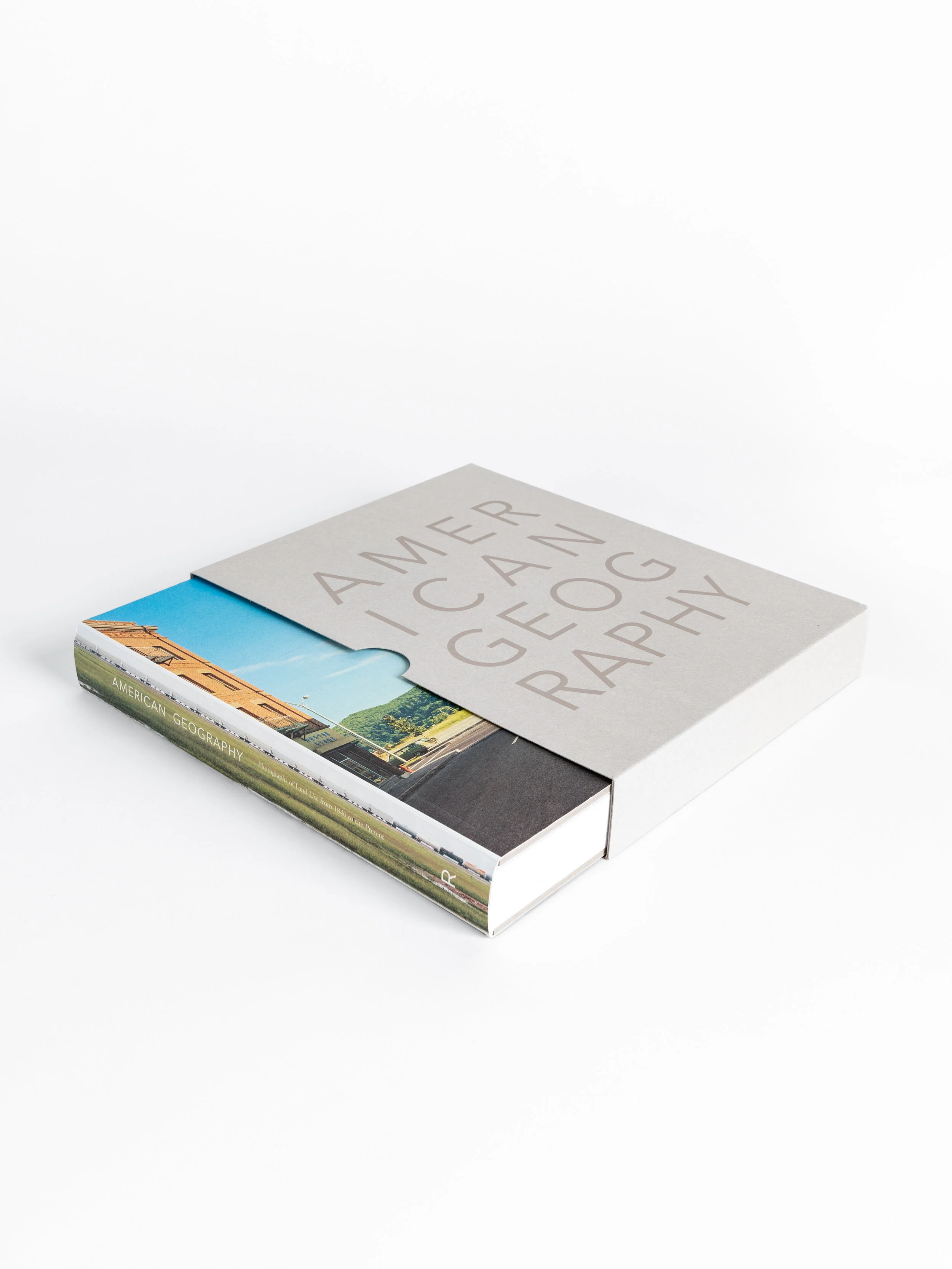
Drawing primarily from the vast permanent collection of photography at the San Francisco Museum of Modern Art, American Geography charts a visual history of land use in the United States.
From the earliest photographic records of human habitation to the latest aerial and digital imagery, from nearly uninhabited desert and isolated mountainous territories to suburban sprawl and densely populated cities, this compilation offers an increasingly nuanced perspective on the American landscape. Divided by region, these photographs address ways in which different histories and traditions of land use have given rise to different cultural transitions: from the Midwestern prairies and agricultural traditions of the South, to the riverine systems in the Northeast, and the environmental challenges and riches of the far West.
American Geography provides a complex, thought-provoking survey featuring work from Robert Adams, Dawoud Bey, Barbara Bosworth, Debbie Fleming Caffery, William Eggleston, Mitch Epstein, Terry Evans, LaToya Ruby Frazier, Emmet Gowin, Lee Friedlander, Dorothea Lange, An-My Lê, Trevor Paglen, Wendy Red Star, Mark Ruwedel, Victoria Sambunaris, Stephen Shore, Alec Soth, and Carleton E. Watkins, among others.
This book is SOLD OUT

Drawing primarily from the vast permanent collection of photography at the San Francisco Museum of Modern Art, American Geography charts a visual history of land use in the United States.
From the earliest photographic records of human habitation to the latest aerial and digital imagery, from nearly uninhabited desert and isolated mountainous territories to suburban sprawl and densely populated cities, this compilation offers an increasingly nuanced perspective on the American landscape. Divided by region, these photographs address ways in which different histories and traditions of land use have given rise to different cultural transitions: from the Midwestern prairies and agricultural traditions of the South, to the riverine systems in the Northeast, and the environmental challenges and riches of the far West.
American Geography provides a complex, thought-provoking survey featuring work from Robert Adams, Dawoud Bey, Barbara Bosworth, Debbie Fleming Caffery, William Eggleston, Mitch Epstein, Terry Evans, LaToya Ruby Frazier, Emmet Gowin, Lee Friedlander, Dorothea Lange, An-My Lê, Trevor Paglen, Wendy Red Star, Mark Ruwedel, Victoria Sambunaris, Stephen Shore, Alec Soth, and Carleton E. Watkins, among others.
This book is SOLD OUT
YOU MAY ALSO LIKE
I am increasingly interested in the residual power of the past to inhabit material remains…Manifest is an effort to seek out the artifacts and material evidence of the American construct and representation of race.
— Wendel A. White
Manifest | Thirteen Colonies is the culmination of a multiyear journey by photographer Wendel A. White to find and document African American material culture in the libraries, museums, and archives of the thirteen original English colonies and Washington, DC. This “personal reliquary of Black agency and racial oppression stored in public collections” includes both singular objects connected to significant figures (a lock of Frederick Douglass’s hair, Malcolm X’s tape recorder) and more quotidian materials (a hair straightening comb, a pressed corsage). Given the same photographic treatment—each object centered on a stark black background and captured with a shallow depth of field—the distinction between the “significant” and the “quotidian” dissolves, as White makes it clear they are all important pieces of forensic evidence of Black life and history in the United States.
New essays by Cheryl Finley, Ilisa Barbash, and Leigh Raiford provide historical and sociological context for the objects in White’s images, while conversations with Deborah Willis and Brenda Dione Tindaldelve into White’s personal history, his life as a photographer, and the bodies of work that led to Manifest | Thirteen Colonies.
David Benjamin Sherry’s photographs of the American West remind us why nature is worth preserving.
– The New York Times
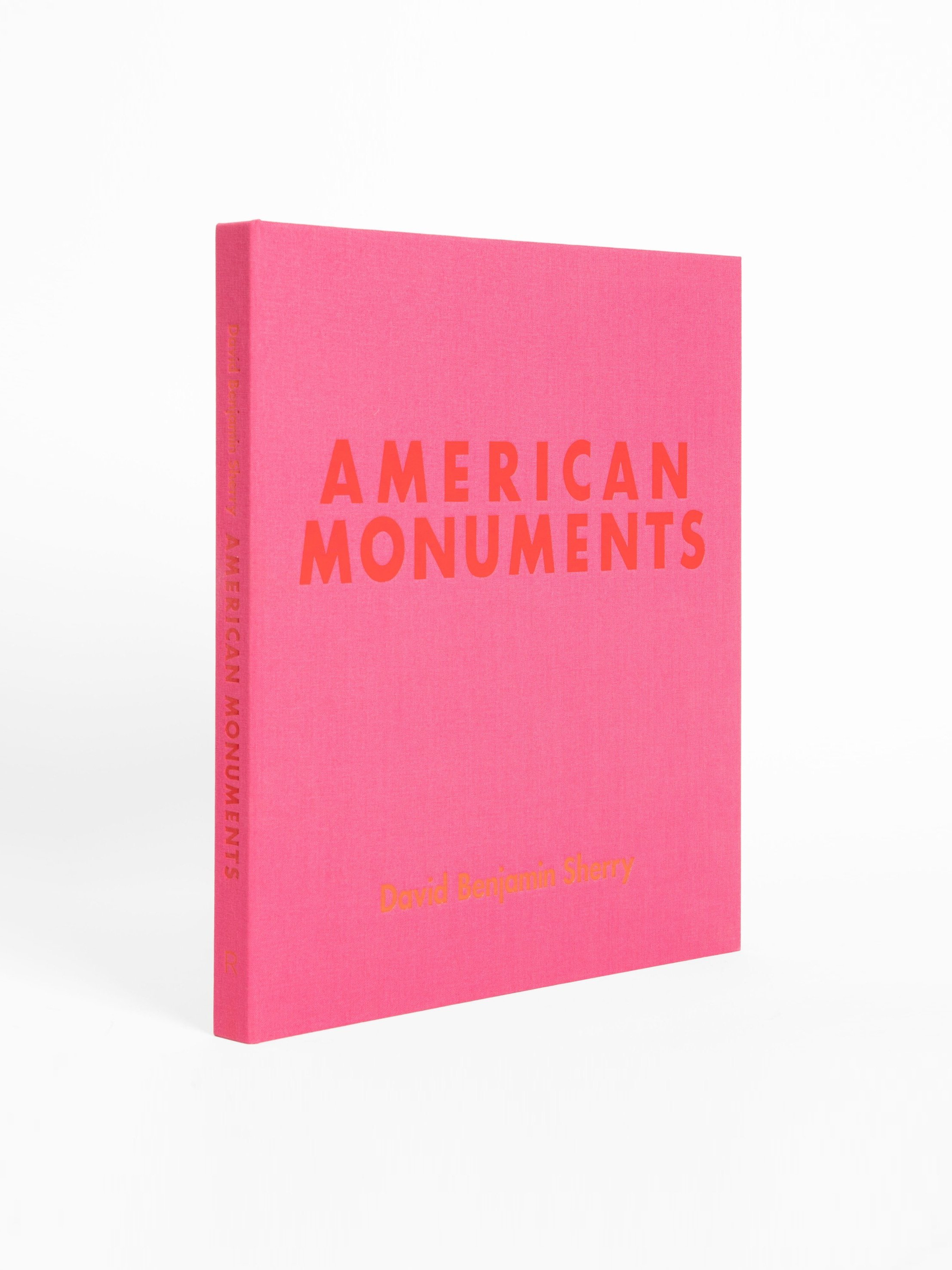
American Monuments is a landscape photography project that captures the spirit and intrinsic value of America’s threatened system of national monuments. In April 2017, an executive order called for the review of the twenty-seven national monuments created since January 1996. In December 2017, the final report called on the president to shrink four national monuments and change the management of six others, recommending that areas in Maine, Nevada, New Mexico, Utah, and the Atlantic and Pacific Oceans be offered for sale, specifically for oil drilling and coal and uranium mining. American Monuments focuses on the areas under review, with special emphasis on those that have already been decimated.
David Benjamin Sherry documents these pristine, sacred, and wildly diverse areas using the traditional, historic 8 × 10-inch format. The resulting photographs not only convey the beauty of these important and ecologically diverse sites, but also shed light upon the plight of the perennially exploited landscape of the American West.
Limited edition of this book available HERE
He captures the spirit of the explorer’s dark, wide-eyed vision with a critical distance.
— Jordan G. Teicher, Photograph Magazine
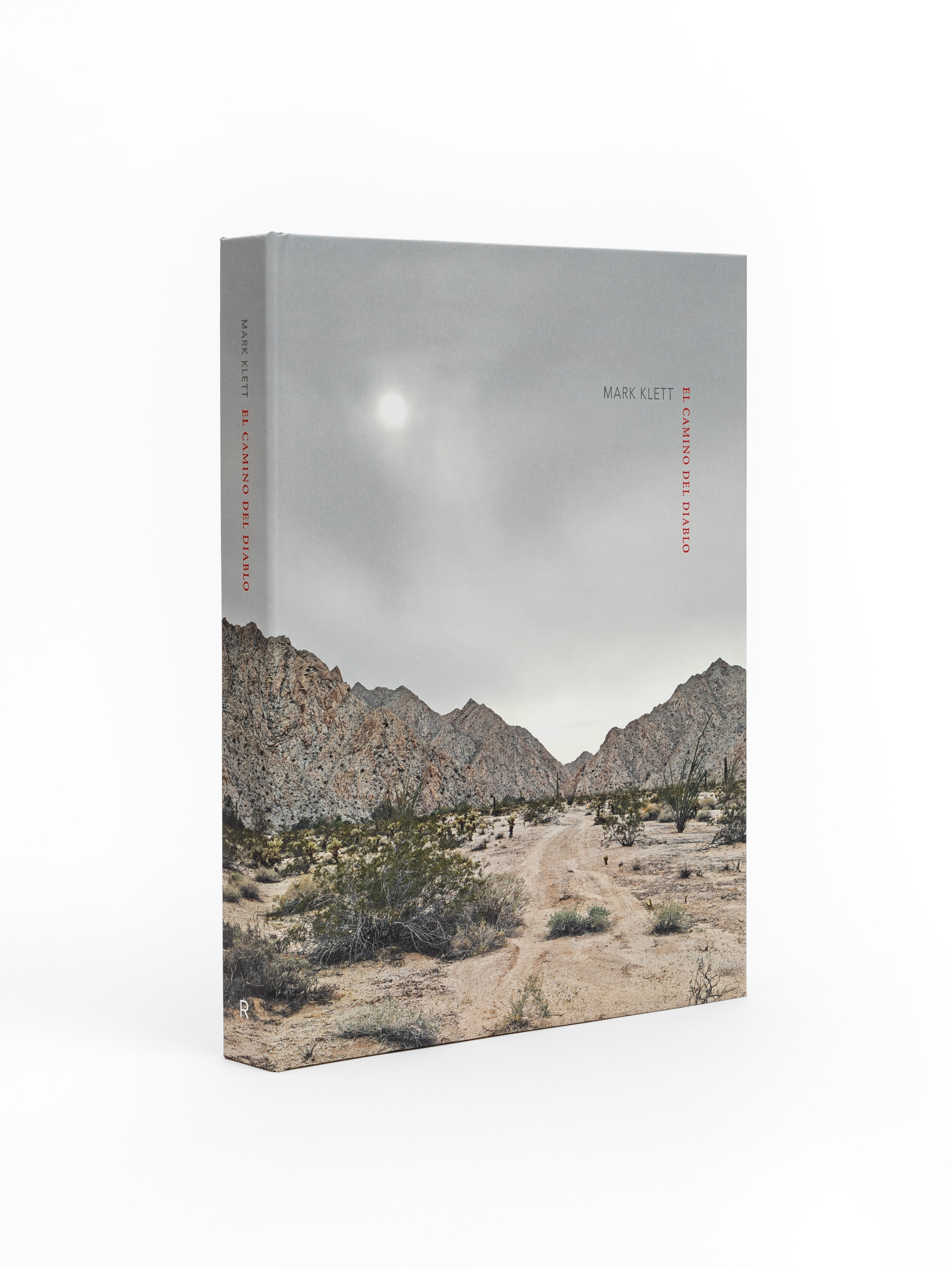
Much of Mark Klett’s work as a photographer has centered on a conversation with historical images. For this project, Klett worked only with the account of a young mining engineer named Raphael Pumpelly, who wrote of his journey through Arizona and Mexico in 1861 on the Camino del Diablo or “the road of the devil.” Pumpelly found the territory lawless and filled with danger. Mexican laborers working in the silver mines south of Tucson were perpetually killing their Anglo bosses, and the authorities were virtually non-existent. The Apache led constant raids and ambushes. Pumpelly escaped death several times, often by a matter of minutes. Traveling 130 miles of open desert, he proceeded with both apprehension of the dangers at hand, and appreciation of the natural beauty that surrounded him.
152 years later, Klett traversed the same route, making photographs in response to Pumpelly’s words. Unable to trace the engineer’s exact steps, Klett created images that are not literal references to specific places or events. Rather, he sought to produce a more poetic narrative to their shared experience of the Arizona desert, along the common route that connects the two through time.
Today, most of the Camino is located on the Barry M. Goldwater Bombing Range and the border is a militarized zone constantly patrolled by government agents and crisscrossed by air and ground forces practicing for war. Camino travelers often hide from detection, be they immigrants or drug smugglers moving North under the cover of night or the ruggedness of the terrain. Indian reservations create boundaries and mark other cultural divides. A hostile climate kills many who dare travel in hot weather and people die each year on the Camino, most from exposure. Yet the Camino also crosses one of the most beautiful and still wild regions of the Sonoran Desert.
Limited edition of this book available HERE
-
Edited by Sandra S. Phillips and Sally Martin Katz
Texts by Beverly Dahlen, Hilary Green, Layli Long Soldier, Barry Lopez, Jenny Reardon, Richard White, and Richard B. WoodwardHardcover
9.5 x 12 inches
372 pages / 345 images
ISBN: 9781942185796 — $60Watch previous book events HERE
Link HERE to Jenny Reardon’s audiovisual experience, Nowhere: In Particular, that accompanies her essay.
I think of “social geography” as a term to describe my photographic work and methodology…The photographs that I produce question traditional and clichéd notions of landscape, our place within it, and the collective roles and responsibilities in how and why we shape it the way we do.
— Victoria Sambunaris
Her first book in over ten years, Victoria Sambunaris: Transformation of a Landscape shares the nuance and majesty of the artist’s practice in a large-scale book format. Each year, Sambunaris structures her life around a photographic journey traversing the American landscape. Equipped with a 5×7-inch field camera, film, a video camera, and research material, she crosses the country alone by car for several months. Her large-scale photographs capture the continuing transformation of the American landscape with specific attention given to expanding political, technological, and industrial interventions.
Part of her ongoing, twenty-year series Taxonomy of a Landscape, this book encompasses the past decade of work, including collected ephemera that form the essential and incidental elements of her practice as a photographer and researcher. Also featured are archival documentation of experiences and observations on the road, such as snapshots, maps, road logs, journals, geology and history books, mineral specimens, and artifacts. This title follows her first book with Radius, Taxonomy of a Landscape.
Browse upcoming events with the artist here.