Helen Frankenthaler: Late Works, 1988–2009 is the first book to explore the late period of Frankenthaler’s art and life.
Profusely illustrated with more than 95 plates and 40 archival images, the book features essays by Douglas Dreishpoon and Suzanne Boorsch; a roundtable discussion with Katharina Grosse, Pepe Karmel, and Mary Weatherford; an illustrated chronology and selected bibliography. Initiated by Dreishpoon, Director of the Helen Frankenthaler Catalogue Raisonné and Chief Curator Emeritus at the Albright-Knox Art Gallery, the book complements an exhibition of Frankenthaler’s late paintings on paper and canvas organized by the Helen Frankenthaler Foundation and curated by Dreishpoon that premiered in 2021 at the New Britain Museum of American Art before traveling to the Weatherspoon Art Museum, Palm Springs Art Museum, and Artis—Naples/The Baker Museum.
Frankenthaler’s invention of the soak-stain technique expanded the possibilities of abstract painting with references to figuration and landscape. In later years, her practice continued to evolve through the use of diverse media and processes, as she shifted from painting canvas on the floor to using larger sheets of paper that were laid out on the floor or on table tops for easier accessibility. The continuity between the late work and what came before is striking, as the painter, graced with a vast art-historical image bank, and technical prowess, moved in whatever direction suited her mood and imagination.
Helen Frankenthaler: Late Works, 1988–2009 is the first book to explore the late period of Frankenthaler’s art and life.
Profusely illustrated with more than 95 plates and 40 archival images, the book features essays by Douglas Dreishpoon and Suzanne Boorsch; a roundtable discussion with Katharina Grosse, Pepe Karmel, and Mary Weatherford; an illustrated chronology and selected bibliography. Initiated by Dreishpoon, Director of the Helen Frankenthaler Catalogue Raisonné and Chief Curator Emeritus at the Albright-Knox Art Gallery, the book complements an exhibition of Frankenthaler’s late paintings on paper and canvas organized by the Helen Frankenthaler Foundation and curated by Dreishpoon that premiered in 2021 at the New Britain Museum of American Art before traveling to the Weatherspoon Art Museum, Palm Springs Art Museum, and Artis—Naples/The Baker Museum.
Frankenthaler’s invention of the soak-stain technique expanded the possibilities of abstract painting with references to figuration and landscape. In later years, her practice continued to evolve through the use of diverse media and processes, as she shifted from painting canvas on the floor to using larger sheets of paper that were laid out on the floor or on table tops for easier accessibility. The continuity between the late work and what came before is striking, as the painter, graced with a vast art-historical image bank, and technical prowess, moved in whatever direction suited her mood and imagination.

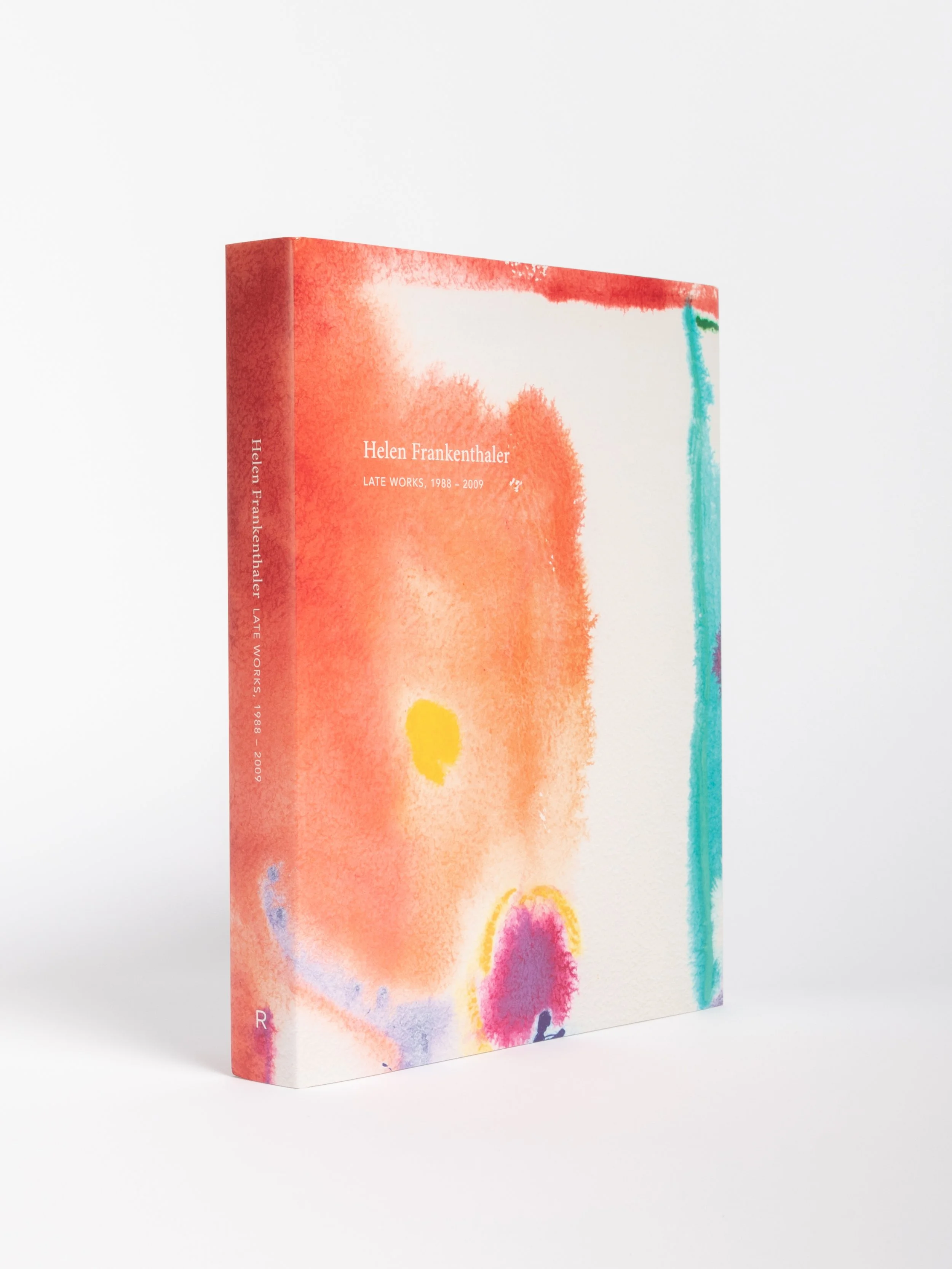 Image 1 of 8
 Image 2 of 8
 Image 3 of 8
 Image 4 of 8
 Image 5 of 8
 Image 6 of 8
 Image 7 of 8
 Image 8 of 8
Georgia O’Keeffe’s early watercolor paintings: vivid, free-wheeling and full of surprise.
– Karen Wada, Los Angeles Times
Georgia O'Keeffe: Watercolors catalogs the first major exhibition in 2016 of the nearly 50 watercolors created by O’Keeffe between 1916 and 1918, while she lived in Canyon, Texas. These years mark a period of radical innovation for the artist, during which she firmly established her commitment to abstraction. While her work in Texas is often understood as merely a prelude to her career in New York City, these watercolors and drawings mark a seminal stage in O’Keeffe’s artistic formation, representing the pivotal intersection of her disciplined art practice and her allegiance to the revolutionary techniques of her mentor, Arthur Wesley Dow.
O’Keeffe’s watercolors explore the texture and landscape of the Texas desert and the artist’s own body in an exceptionally fragile and sensitive medium, representing a substantial achievement in their own right. These early works also relate to O’Keeffe’s large-scale oil paintings, which in their handling of color and texture in some ways seem to aspire to the condition of watercolor.